Seville holds layers of history shaped by Moorish rulers, Christian monarchs, and Atlantic trade. Streets near the Guadalquivir still reflect those eras through palaces, towers, courtyards, and religious buildings. Many travelers arrive with a short itinerary, then realize major Seville landmarks sit close together yet require time for lines and seasonal crowds. Spring festivals fill hotels and raise daily visitor numbers, especially around Easter and April fairs. The historical places in Seville listed below reveal political shifts, architectural craft, and daily life.
Top Historical Places to Visit in Seville
Real Alcázar of Seville
The Real Alcázar is the kind of place that slows your pace the moment you step inside. Its walls carry traces of Islamic Seville, then later royal expansion under Christian rule, which gives the palace its unusual mix of Mudéjar detail, Gothic rooms, and Renaissance touches. Early entry makes a real difference, especially in spring, when Holy Week crowds can turn the ticket line into part of the visit.
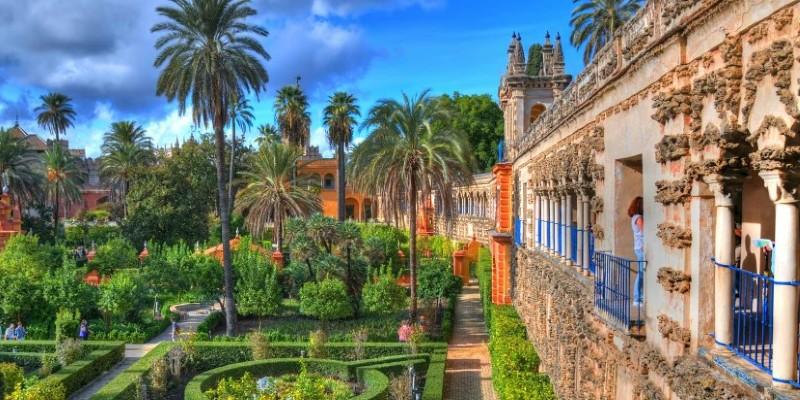
Booking ahead saves time and avoids standing in the heat outside. The tiled courtyards draw plenty of attention, but the gardens are just as memorable. Many visitors misjudge the scale of the site, so setting aside two hours usually feels right.
Seville Cathedral
Seville Cathedral stands among the largest churches in Europe. Built on the site of a former mosque, the structure reflects the wealth generated through trade with the Americas during the 16th century. Inside, high ceilings and long chapels stretch across an enormous floor plan. First-time visitors often expect a shorter visit but end up spending over an hour simply walking between altars and chapels.
Midday visits can feel crowded during peak months. Early morning entry usually moves faster. Ticket bundles that include the Giralda tower allow entry to both attractions without a second line. Travelers interested in Seville landmarks tied to maritime trade often focus on the tomb attributed to Christopher Columbus, displayed inside the cathedral.
The Giralda Tower
The Giralda is one of those places that explains Seville at a glance. It started life as a 12th century Almohad minaret, then later became the bell tower attached to the cathedral. That layered history gives it more character than a standard viewpoint. Inside, the climb feels unusual, since broad ramps replace tight staircases.
Centuries ago, that design made movement easier for riders and guards. Today, it makes the ascent far less tiring, even on a warm day. At the top, the city opens up in every direction, with rooftops, church domes, courtyards, and winding lanes. Go early if possible. The atmosphere feels quieter, the light is softer, and the views stay sharper.
Archivo General de Indias
This archive building preserves documents related to Spain’s colonial administration. The building itself once served as a merchants’ exchange during the 16th century. Travelers often skip this stop, yet it provides context for Seville’s wealth during the era of transatlantic trade. Shipping records, maps, and correspondence reveal the scale of commerce passing through the Guadalquivir River.
Entry remains free, which helps travelers balancing tighter budgets after higher hotel rates during festival season. The interior visit remains short, usually under forty minutes. Quiet halls offer a break from crowded cathedral squares nearby. For visitors interested in historical places in Seville tied to maritime administration, this archive fills an important gap.
Torre del Oro
Torre del Oro rises above the Guadalquivir with the kind of presence that makes people stop walking for a second. Built in the 13th century, it once guarded the river approach to Seville, forming part of the city’s old defense system. Its name is often linked to the warm golden glow cast across the water when sunlight hits the tower at the right angle.
Inside, the maritime museum is small and easy to fit into a busy day. Many visitors pair it with a walk toward Triana. Go later in the day if possible, when the riverside cools down and the evening light softens everything beautifully.
Plaza de España
Plaza de España belongs to a later period, built for the Ibero-American Exposition in 1929. The site still represents one of the grand Seville landmarks tied to national identity. Curved buildings surround a large canal and central plaza. Ceramic tile murals represent provinces across Spain.
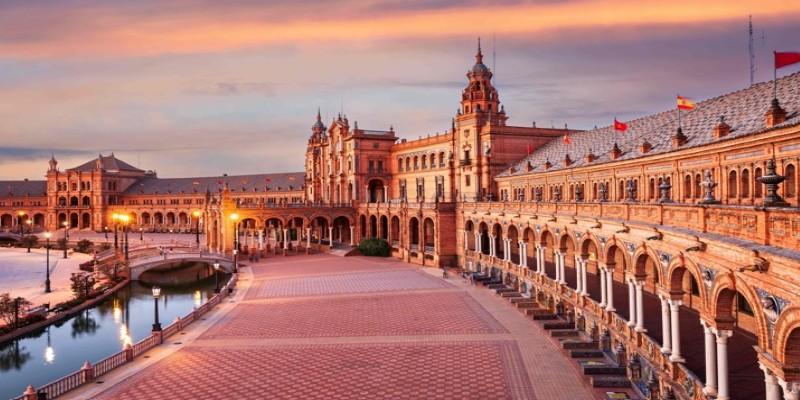
Tour buses often stop here during midday routes. Early morning visits provide space for walking along the bridges and arcades without large crowds. Summer heat reflects strongly from the open square, so shade beneath the arcades becomes valuable. Water fountains nearby help travelers cool down during long walking days.
Hospital de los Venerables
Tucked into the winding lanes of Santa Cruz, Hospital de los Venerables feels like a quiet pause after Seville’s busier landmarks. Built in the 17th century as a residence for elderly priests, it now draws visitors with peaceful courtyards, rich tile work, and intimate galleries.
The setting feels personal rather than grand, which is part of its appeal. Temporary art exhibitions add variety, so no two visits feel the same. Late afternoon is a time to go, when cathedral crowds thin out, and the building settles into its calm rhythm.
Casa de Pilatos
Casa de Pilatos blends Italian Renaissance ideas with Andalusian design. Noble families used the residence for centuries, leaving behind decorative patios, statues, and tiled corridors. The palace layout centers around a courtyard filled with columns and arches. Upper floors contain private rooms with painted ceilings and antique furniture.
Visitors often compare the residence to the Alcázar. The difference lies in scale. Casa de Pilatos feels more intimate and easier to complete within an hour. Photography restrictions apply in some rooms. Travelers using cameras should check posted rules before entering interior spaces.
Conclusion
Historical places in Seville reveal the city’s role as a political and commercial center across centuries. Islamic rule shaped early architecture, then Christian expansion added cathedrals and palaces that still dominate the skyline. Trade through the Guadalquivir River funded many of the buildings visitors see today. A careful itinerary helps travelers manage crowds and spend enough time at each landmark. Together, these Seville historic sites show the city’s layered past still visible throughout its streets.