Why Croatia’s islands look impossibly blue
The first time you step off a ferry and look down from the quay, the color almost feels like a filter—until you realize it’s just physics doing you a favor. Croatia’s island water reads so intensely blue because much of the coast is rocky (not silty), the sea is often very clear, and the light bounces off pale limestone bottoms instead of disappearing into darker sand. When it works, it’s the kind of visibility where you can watch your feet kick over stones a few meters down; when it doesn’t, it’s usually because wind has roughened the surface or boat traffic has churned up a popular bay.
There’s also a small planning catch: the “bluest” water isn’t always sitting next to the prettiest old town. Big ports and busy harbors are practical for arriving, but they’re not where you’ll get that glassy, saturated blue—too many ferries, too much shade from seawalls, and not much natural shallows. The most reliable color tends to show up a little away from the main docks, in open coves with sun exposure, or along stretches where you’re walking down to the water over rock (beautiful, but not always friendly if you’re expecting a soft beach).
If your trip is 7–10 days and you don’t want to live on ferry schedules, the mental model that helps is simple: choose islands for swim access first, towns second. You can always do a “pretty town” evening, but you can’t manufacture calm, clear water at 2 p.m. in a crowded harbor.
Pick your island cluster: easy, wild, or iconic
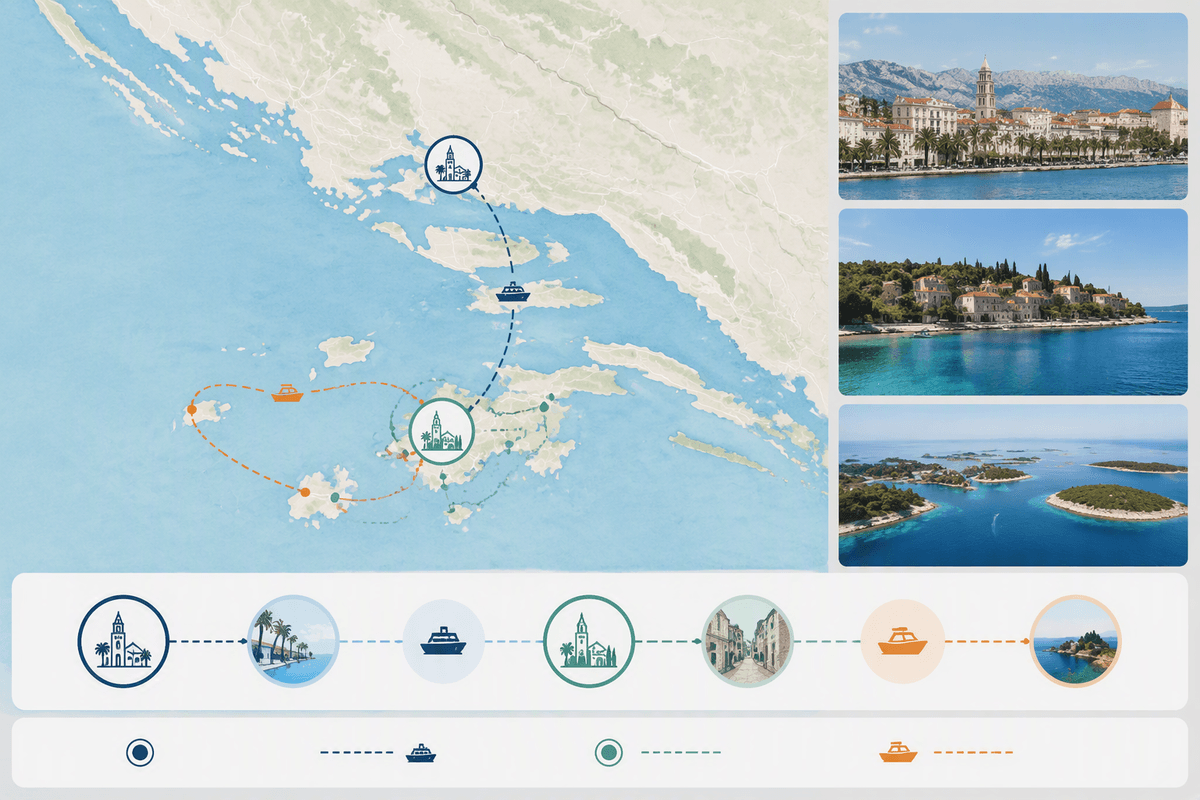
On our map app, the islands looked like they were all “right there,” but the first real decision was admitting we didn’t want to spend half the trip watching wakes from a ferry deck. From Split, the easiest cluster is Brač–Hvar–Šolta: frequent connections, short crossings, and enough coves that you can still find deep-blue water if you’re willing to walk 15–30 minutes away from the main town beaches. It’s efficient, but in July and August it can feel like everyone else made the same smart choice—so the convenience comes with crowds and higher prices in the obvious spots.
If you want wilder water and quieter evenings, push toward Vis (often with a catamaran or a longer sailing) and treat it as a base rather than a checkbox. The payoff is less “port energy” and more swim-first bays; the cost is fewer departure times and less tolerance for last-minute changes if the sea gets choppy.
Dubrovnik flips the logic: the iconic move is the Elaphiti Islands as day trips (great water, minimal packing), but it’s easy to overpay for a rushed loop. For a 7–10 day plan, the cleanest stitch is one base on the mainland side (Split or Dubrovnik) and one island base—two moves total—then sprinkle in one boat day instead of trying to “collect” islands.
Signature deep-blue spots: coves, caves, and beaches
Our first real “okay, this is the color” moment wasn’t in a town at all—it was after a sweaty walk down to a cove where there was nothing to look at but rock, sea, and a few anchored boats. That’s the pattern Croatia rewards: deep-blue water usually lives a little away from ports, and the best spots can feel mildly inconvenient on purpose. On Brač, Zlatni Rat is the headline, but it’s also where the day-trip gravity gets strongest; if you want the same clarity with less shoulder-to-shoulder energy, aim for smaller coves around Bol and accept you’ll be carrying water shoes and your own shade. Hvar has plenty of blue, but the near-town swimming can read more “scene” than “escape” in high summer—great if you want a lively afternoon, less great if your goal is quiet float time.
Vis is where the coves start feeling like destinations instead of add-ons. Stiniva can be stunning, but the access (steep path or boat timing) turns it into a commitment, not a casual dip—go early or be ready for a cramped landing zone by late morning. The Blue Cave on Biševo is genuinely memorable when the light hits, but it’s also the kind of place that can be either magical or mildly irritating depending on queues and sea conditions, so it works best as the “one famous thing” you do from a Vis base, not a tight day-trip from elsewhere.
If you’re Dubrovnik-based, Lokrum and the Elaphiti islands can deliver that saturated water fast, but the constraint is that you’re sharing it with a lot of other people who also chose the simple plan. We found it helps to treat the marquee spots like a morning mission—arrive early, swim, then retreat to somewhere less obvious for the slow part of the day when the boats and heat stack up.
Best ways to experience the blue: boat, kayak, snorkel
The first time we priced a “Blue Cave + five stops” speedboat day, we had that quick gut-check moment: do we want a curated highlight reel, or do we want long, unstructured swim time? The boat day wins when your base is a busy port (Split or Hvar Town) and the best color is scattered out of walking range—especially around the Pakleni islets off Hvar or the Vis/Biševo loop. But you pay for it twice: once in euros, and again in pace. If your operator stacks too many photo stops, you’ll spend more time bobbing in a queue than actually floating in that ink-blue water.
Kayaking is the opposite rhythm—slower, quieter, and brutally honest about heat and wind. Early morning works; midday can feel like paddling inside a hair dryer, and afternoon chop turns “romantic” into “why are my shoulders on fire.” It’s best when you’re already staying near a shoreline you like (think Hvar Town to a nearby cove, or around Dubrovnik/Lokrum), and less useful if your real goal is hopping between far-apart bays.
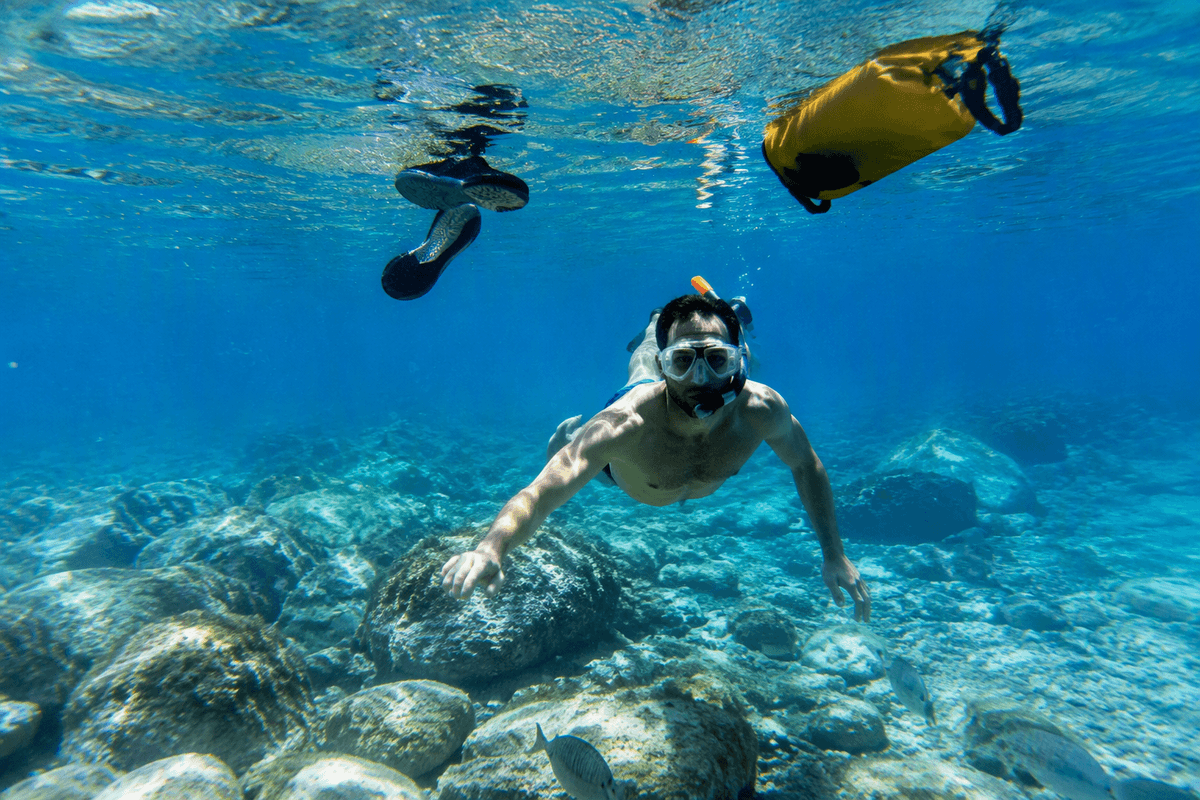
Snorkeling is the easiest upgrade to almost any plan, but Croatia’s rocky entries are the limiter. A cheap mask is fine; what mattered more for us were water shoes and a dry bag, because the nicest water often starts with a scramble over limestone. If you only pre-book one water experience, make it a single well-timed boat day—and keep the rest flexible so you can follow the calm, clear mornings.
Practical logistics: ferries, day trips, timing, costs
The moment we finally relaxed was the moment we stopped trying to “optimize” every crossing. In summer, Croatia’s ferries and catamarans are reliable enough to plan around, but not so frictionless that you want a daily move—bags, check-out times, and the walk from port to apartment quietly eat the best swimming hours. For a 7–10 day trip, two bases (one mainland gateway, one island) is the sweet spot: you get island mornings without becoming a professional schedule-checker, and you’re less exposed when wind turns an afternoon ride into a bouncy headache.
If you’re flying into Split, the most forgiving logistics are short hops: Split to Šolta or Brač when you want easy swims, then onward to Hvar if you want more variety (and nightlife) without a long commitment. Vis is worth it, but it’s the island where “we’ll just pop over” stops working—fewer departures means you plan your crossing day around the timetable, not the other way around. From Dubrovnik, the easiest win is staying put and doing one strong island day (Elaphiti or Lokrum); trying to stitch multiple islands from there can feel like you’re paying a premium to sit in transit.
Costs swing with speed and convenience. Fast catamarans save time but can sell out on peak days; car ferries are often cheaper and steadier but lock you into longer crossings and port locations. We found the best compromise was booking only the unmissable pieces (your one boat day and any peak-time catamaran you truly need), then leaving the rest flexible so you can ride the calmer, clearer mornings—and avoid paying top price for an itinerary that the sea might veto.
Leave with the sea: safety, etiquette, lasting impressions
Our last swim started the way a lot of Croatia’s best ones do: standing on sun-warmed limestone, watching a tiny set of waves slap the rocks, and deciding whether it was a “yes” day or a “not worth the ankle” day. The water can look calm from above and still surge at the entry, especially in the afternoon when boat wake and wind stack up. If you’re choosing between squeezing in one more cove or keeping it easy, take the easy win—scraped shins and a rushed ferry time don’t pair well.
Etiquette here is mostly about not turning someone else’s quiet bay into your soundtrack. Anchored boats, cliff jumpers, snorkelers, and families all share the same few entry points, and the narrow rocky ledges can bottleneck fast. We had better luck swimming 30–50 meters away from the main “ladder zone,” keeping voices low, and treating drones and speakers as a hard no—if you want the cinematic blue, you also have to protect the mood that makes it feel cinematic.