Salzburg is one of Europe’s most visually refined small cities, shaped by centuries of religious influence, artistic ambition, and a close relationship with the surrounding Alps. Set along the Salzach River near the German border, the city is best known internationally as the birthplace of Wolfgang Amadeus Mozart, yet its appeal extends far beyond musical heritage. Baroque architecture, fortress views, and carefully preserved streets give Salzburg a composed and graceful atmosphere that feels consistent rather than theatrical.
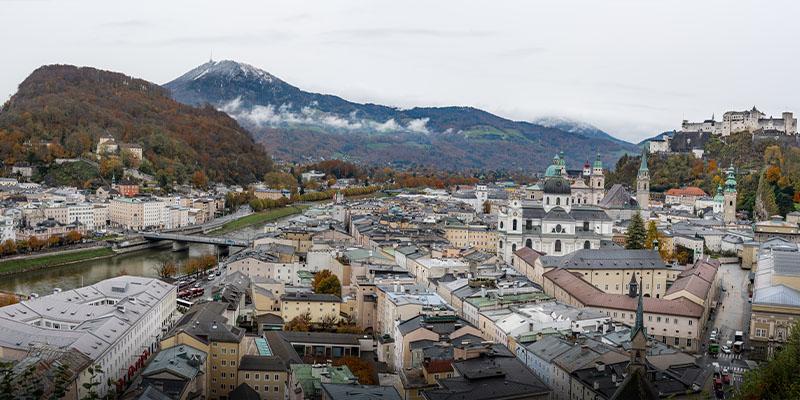
As a Salzburg travel guide destination, the city works well for travelers who enjoy walking-based exploration. Distances are short, the historic center is compact, and many of the most important Salzburg attractions sit within easy reach of one another. Salzburg sightseeing unfolds naturally, revealing layers of history alongside daily life rather than feeling staged for visitors.
Wandering Through Salzburg’s Old Town
Salzburg’s Old Town forms the cultural and architectural core of the city and has earned UNESCO World Heritage status for its remarkable preservation. Walking through the historic center feels immersive rather than overwhelming. Narrow pedestrian streets open into wide squares framed by church domes, ornate facades, and centuries-old residences that reflect the city’s former wealth as an ecclesiastical state.
Getreidegasse is the most famous street in the Old Town, known for its wrought-iron shop signs and tightly packed buildings. While it attracts many visitors, quieter side streets reveal small courtyards, traditional craft shops, and residential corners that offer a more personal sense of place. Salzburg Old Town rewards those who wander without a fixed route, allowing its rhythm to guide the experience.
Visiting Mozart’s Birthplace
Few places in Salzburg are as closely tied to its identity as Mozart’s Birthplace. Located at number 9 Getreidegasse, the yellow townhouse where Wolfgang Amadeus Mozart was born in 1756 has become one of the city’s most visited museums. Inside, exhibitions focus on Mozart’s early years, his family life, and his rapid musical development during childhood.
Original instruments, handwritten letters, and portraits help illustrate how closely Mozart’s formative years were linked to Salzburg itself. Visiting the museum adds depth to understanding why the city is often referred to as a Mozart city, not only because of his birth but because of how deeply his legacy remains woven into local culture, concerts, and institutions.
Exploring Hohensalzburg Fortress
Towering above the Old Town, Hohensalzburg Fortress dominates Salzburg’s skyline and serves as a visual anchor from almost every viewpoint. Built in the eleventh century, the fortress is one of Europe’s largest and best-preserved medieval strongholds. Visitors can reach it by funicular or by walking up a steep but scenic path through wooded slopes.
Inside the fortress walls, courtyards, exhibitions, and preserved interiors offer insight into medieval life and the power once held by Salzburg’s prince-archbishops. The real highlight, however, is the view. From the fortress ramparts, Salzburg spreads out below in a carefully ordered pattern, framed by river bends and alpine foothills. This vantage point reinforces how closely Salzburg sightseeing is tied to landscape as well as architecture.
Walking Through Mirabell Palace and Gardens
On the opposite side of the Salzach River lies Mirabell Palace, a baroque complex originally built as a residence for a prince-archbishop’s mistress. Today, the palace and its gardens form one of the most serene spaces in the city. The gardens are laid out with precise symmetry, featuring geometric flowerbeds, statues, and fountains aligned to frame direct views of Hohensalzburg Fortress.
Mirabell Gardens are open year-round and change character with the seasons. Spring and summer bring vibrant color, while winter offers a quieter, more contemplative setting. The palace’s Marble Hall, often used for chamber concerts and weddings, adds another layer to Salzburg’s musical tradition.
Stepping Inside Salzburg Cathedral
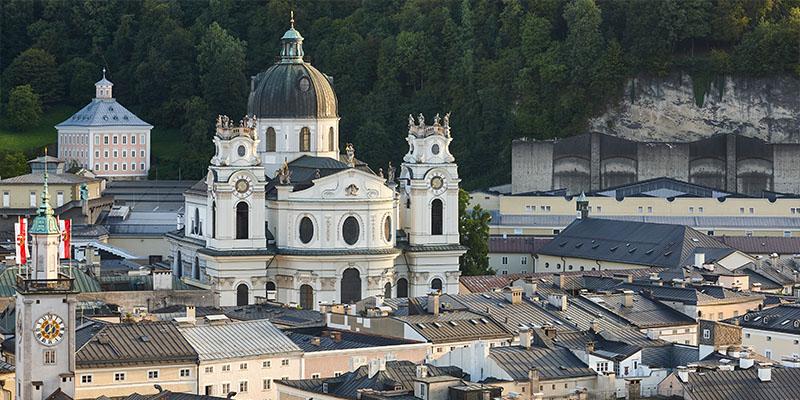
Salzburg Cathedral stands at the heart of the Old Town and plays a central role in the city’s religious and architectural history. The baroque structure replaced earlier churches destroyed by fire and reflects the ambition of Salzburg’s former rulers. Inside, the cathedral’s high ceilings, frescoes, and organ create a sense of scale and grandeur that contrasts with the narrow streets outside.
Mozart was baptized in the cathedral, further connecting the building to the city’s musical legacy. The surrounding Domplatz often hosts markets and seasonal events, making the cathedral an active part of daily city life rather than a static monument.
Strolling Along the Salzach River
The Salzach River divides Salzburg into distinct halves, and walking along its banks offers a calmer way to experience the city. Riverside paths provide open views of the Old Town skyline, fortress walls, and church domes rising above the water. The bridges that cross the river serve as natural observation points and are especially atmospheric in the evening.
This side of Salzburg sightseeing feels slower and less structured. Locals walk, cycle, or pause along the riverbanks, creating a relaxed counterbalance to the city’s historic core.
Discovering The Sound of Music Locations
For many visitors, Salzburg is closely associated with The Sound of Music. Several filming locations remain accessible, including Mirabell Gardens and nearby countryside sites just beyond the city center. While the film’s popularity varies by visitor, these locations have become part of Salzburg’s modern cultural narrative.
Even for those unfamiliar with the film, the surrounding landscapes and historic settings add to the city’s appeal. These sites highlight how Salzburg’s image has been shaped not only by history but also by popular culture.
Enjoying Alpine Views at the City’s Edges
Salzburg’s setting at the edge of the Alps means that nature is never far away. Short walks or cable car rides lead to viewpoints overlooking the city, where rooftops give way to forested hills and distant peaks. These vantage points reinforce Salzburg’s balance between urban refinement and natural surroundings.
The proximity of the mountains makes it easy to combine cultural sightseeing with outdoor exploration, even on short visits. This connection to landscape distinguishes Salzburg from many other historic European cities.
Experiencing Salzburg’s Music Culture Today
Beyond Mozart, Salzburg maintains an active musical life through concerts, festivals, and performances held throughout the year. Classical music remains central, but contemporary events also contribute to the city’s cultural calendar. Attending a concert in a historic venue offers a way to experience Salzburg’s artistic heritage as a living tradition rather than a museum piece.
Final Thoughts
Salzburg offers a carefully balanced experience shaped by music, architecture, and landscape. Its scale allows visitors to explore deeply without feeling rushed, while its layers of history provide substance beyond postcard views. From fortress panoramas and baroque streets to Mozart’s legacy and alpine scenery, the things to see in Salzburg reflect a city that has preserved its identity with intention.
As a destination, Salzburg feels composed and confident, inviting travelers to slow down and observe rather than rush from landmark to landmark. It is a city where cultural depth and visual beauty coexist naturally, leaving a lasting impression long after the visit ends.