Paris does not ask you to chase history. It puts it right in your path. One minute, you are crossing a bridge over the Seine. Next, you are staring at a stone that has seen kings, crowds, and revolutions. That is the magic here.
This guide will take you on a journey through 9 important places that helped shape the city's past. Some are absolute must-sees (for a reason!), while others will quietly surprise you with some tiny little detail that completely catches you off guard—like a tucked-away courtyard or a wall that still feels like it's got a presence.
Notre-Dame: The City’s Old Soul On The River
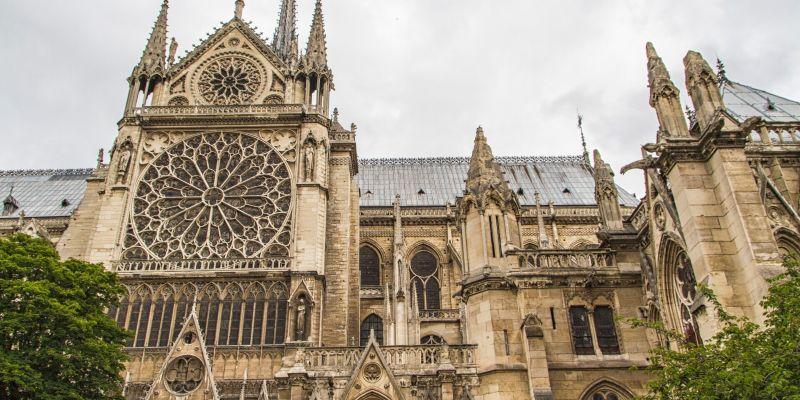
Stand on Île de la Cité, and you can feel Paris tighten into focus. The Seine slides by on both sides. Then Notre-Dame rises as if it has always been there, because it has. It anchors the city’s oldest center with calm, heavy certainty.
Look up, and your eyes start climbing on their own. The towers pull you skyward. The carved faces feel oddly alive. Even from the outside, you sense the years in the stone, like the building has stored every echo it ever heard.
Circle the cathedral and watch how the light changes it. Morning makes it soft. A late day makes it sharp. You do not need to rush inside to get the point. This is Paris remembering itself, right on the river.
Sainte-Chapelle: The Stained-Glass Moment You Never Forget
A few minutes away, Sainte-Chapelle flips the mood. You step in, and the walls seem to vanish. Color takes over. Reds, blues, golds. It feels less like a church and more like standing inside a jewel.
The windows climb high above you in tall panels. Each one holds tiny scenes, stacked like a storybook. Your neck tilts back. Time slows down. People get quiet without being told, because the place does that to you.
Pick one window and follow it from bottom to top. You will spot little figures, ships, crowns, and flames. It is easy to miss how much there is. That is the fun. You leave with your eyes full, like you borrowed new light.
The Conciergerie: Where Power Turned Into Fear
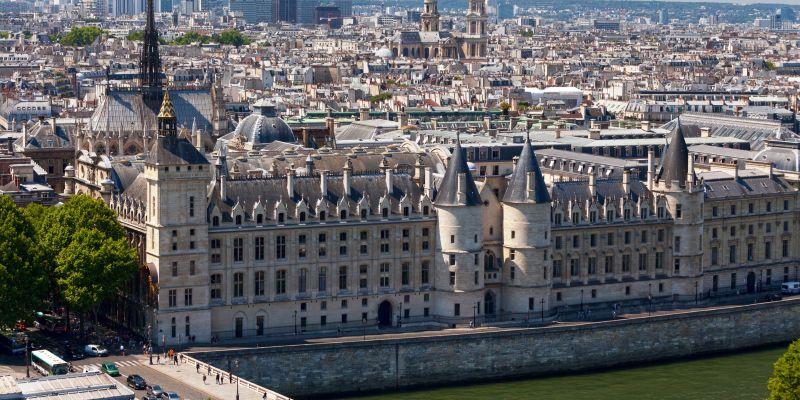
The Conciergerie sits close, yet it feels worlds away. This was once part of a royal palace. Later, it became a prison. That shift matters. You walk in, and the air turns cooler, even on a warm day.
The halls feel practical and hard. Thick walls. Low light. Old stone that does not try to charm you. This is where many waited during the French Revolution, with names that still land like a punch.
Slow down near the cells and read the details. It makes the past human. You stop thinking about “history” and start thinking about one person, one night, one door closing. The city’s drama suddenly feels close enough to touch.
The Louvre: A Palace With A Few Surprises Up Its Sleeve
The Louvre comes at you like a building first. It's a real jaw-dropper. It's big, proud, and just a wee bit intimidating - but in an 'I-want-to-explore-every-inch-of-this-place' kind of way. Before it became the world's most famous museum, it actually used to be a proper palace for kings & queens, and you can just about feel all that history in those long, grand façades & the courtyards that seem to go on forever.
And then you see that enormous glass pyramid - it's a proper oddball, a big chunk of modernity that somehow just works its way into the old stuff with a bit of swagger and a lot of style. It's like someone decided to drag all that history into the 21st century with one clean, bold, and utterly unexpected flourish.
The Panthéon: Big Ideas Under A Bigger Dome
In the Latin Quarter, the Panthéon feels calm and serious. The dome rises above the streets like a promise. It began as a church, then became a place to honor the nation’s great minds. That change gives it a quiet tension.
Step inside, and the space opens up fast. The light is soft. The columns feel steady. Voices drop to a murmur. It is not about sparkle here. It is about weight and the kind of respect that makes you stand a little straighter.
Down below, the crypt brings it home. Names on stone. Lives reduced to dates and choices. You start thinking about what a country remembers and why. It is a powerful pause in the middle of a busy neighborhood.
Les Invalides: War Stories And A Golden Dome
Les Invalides gleams from far away. The gold dome catches the sun and refuses to be ignored. It was built to care for wounded soldiers, and it still carries that purpose in its layout. It feels orderly, proud, and a bit solemn.
Walk through the complex, and you will sense layers. There is a military museum with armor, maps, and banners. There are quiet courtyards where footsteps sound louder than you expect. It is history with a disciplined posture.
Then there is Napoleon’s tomb. Even if you have mixed feelings about him, the place is designed to impress. The scale is deliberate. You look down into the space and feel the message: legacy is built, not just earned.
Arc De Triomphe: The Circle Of Paris In One View
The Arc de Triomphe is slap in the middle of a huge roundabout, like the entire city is throwing all its spotlight on it. The constant hum of traffic whizzing round the circle never lets up. Standing at the edge, its awesomeness just hits you - the broad boulevards stretching off in all directions, like they're spokes on a wheel, giving you a sense of just how massive Paris is.
Get up close and personal, and the stone is just bursting with names and carved scenes - this isn't just some place to stop and take a quick photo. It's a real monument to all the victories and losses and all the stories that nations end up telling about themselves. Even from down on the ground, the level of detail is just incredible.
Now, climb up to the top, and the payoff is just pure unadulterated geometry. The Champs-Élysées stretches out right in front of you in a straight line. The city just lines up in neat, tidy directions - it's no wonder planners have such a thing about symmetry here. Paris looks like it was drawn up by an architect with a ruler - not a single rough edge in sight.
The Eiffel Tower: The Bold Build That Outlasted Its Critics
The Eiffel Tower still feels like a dare. It was built for the 1889 World’s Fair, meant to show off French skill and modern metalwork. Many people hated it at first. They called it ugly. Paris kept it anyway.
Stand under it, and notice the lace-like iron. It is massive, yet it feels light. The legs curve with confidence. The tower does not try to blend in. It owns the skyline, and it makes the river nearby feel like part of the stage.
Go up, and the city turns into layers. Rooftops, bridges, parks, and long streets. The wind reminds you how high you are. You leave with one clear thought: some icons start as risks, not plans.
Montmartre And Sacré-Cœur: A Hill With a Secret to Keep
Montmartre gives Paris a makeover, turning its streets upslope. The air feels like the city is uncorking a breath, and everything tilts a little sideways. You meander past tiny squares where artists do their thing and the sorts of cafes that probably have some kind of fascinating history - the kind that comes from a thousand late nights, whispered secrets, and the odd passerby.
At the top of Montmartre, Sacré-Cœur perches bright & still - its gleaming white stone stands out stark against the sky. The steps are a crush of people taking in the view, and that place has a peaceful yet dramatic vibe - like it knows it's got the best seat in the house.
Go Home With Paris Still In Your Shoes
These nine places do more than fill your camera roll. They change how you read the city. A bridge stops being just a bridge. A stone wall starts feeling like a witness. After a day of this, even a quiet street corner can feel like part of the story.
Plan your route like a good walk, not a race. Start near the Seine on Île de la Cité. Move toward the Louvre and the Latin Quarter next. Save the big views for later, like the Arc, the Eiffel Tower, or the steps at Sacré-Cœur. Your legs will thank you.
Then let Paris finish the job. Sit at a café and listen to the city’s everyday noise. Watch the light fade on old rooftops. You came for history. You leave with it, tucked into your memory like a postcard you will keep.