You spot an account you don’t recognize—what not to do in the first 30 minutes
You pull your credit report, and there it is: an account name you’ve never heard of, a balance, maybe a late payment. The urge is to call the number listed, pay “just to be safe,” or hit the fastest online dispute button and type, “This isn’t mine.” Slow down.
In the first 30 minutes, don’t admit anything, don’t agree to “verify” your identity with a collector, and don’t make a token payment. Those moves can create a paper trail that sounds like you accepted responsibility, and reversing that later is harder than waiting one hour now.
Instead, save a copy of the report page and write down the exact account details so you can figure out what this debt is before you choose a path.
Is it urgent enough to treat like identity theft today?
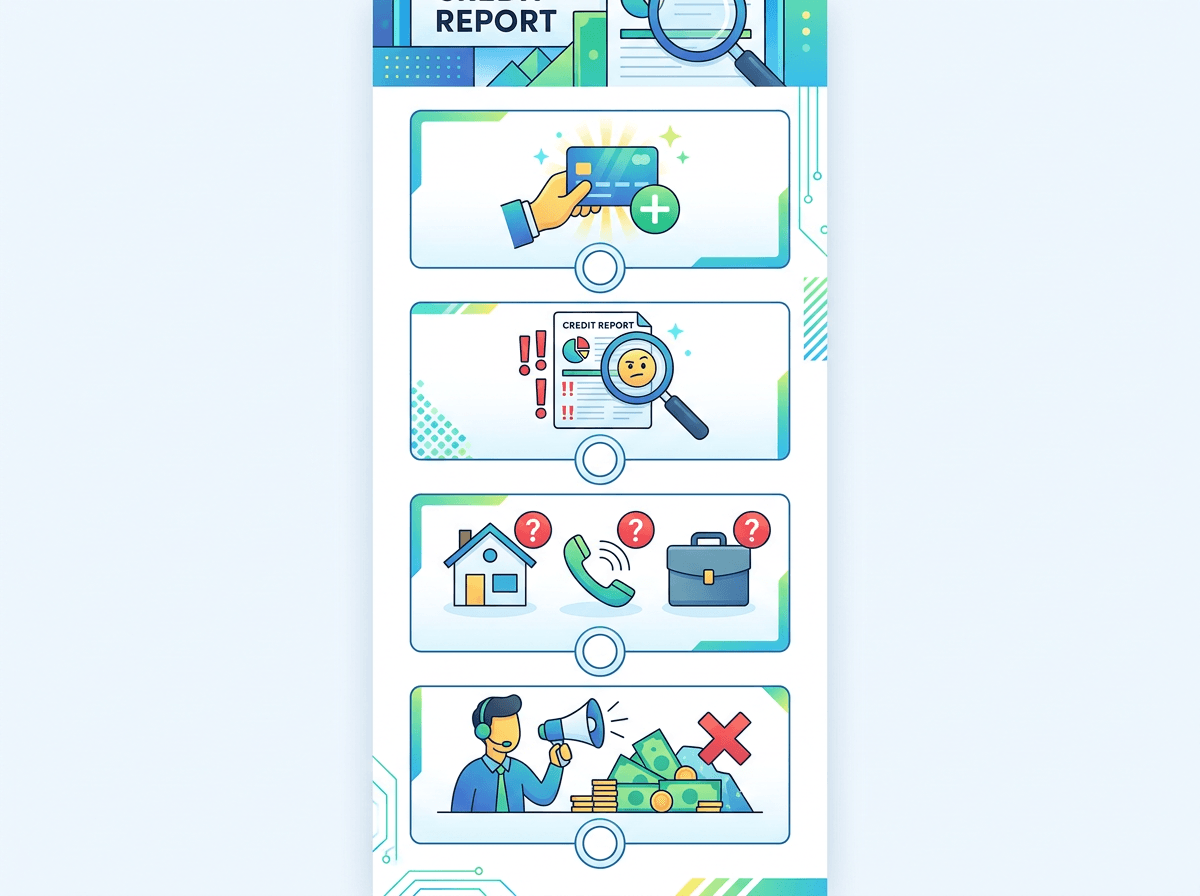
Those exact account details tell you whether you’re dealing with a paperwork mess or something that needs same-day action. If the report shows a brand-new account opened recently, a new hard inquiry you didn’t authorize, or a current address, phone number, or employer you don’t recognize, treat it like identity theft today. The same goes for a collector reporting a balance on an account type you’ve never used (like an auto loan when you’ve never financed a car).
If the “Date opened” is years ago, the creditor name looks like a parent company, or the balance is small and tied to an old address, it’s more likely a sold/renamed account or a mixed file. Still, don’t relax too much: time matters if you have a loan or rental application in the next few weeks, because even a short-lived hit can change a decision.
Your goal now is a quick identity check using only what’s already on the report.
A fast “identity check” using the report details you already have
That quick identity check starts by scanning for mismatches you can’t explain. Compare the account’s “Date opened,” “Date of first delinquency,” and “Last reported” to what you were doing then: where you lived, where you banked, and what credit you actually used. Then check the account type and original amount. A $3,200 “installment” account is a very different problem than a $68 medical collection.
Next, line up the identifiers the report already gives you. Does the account list an address you never used, an employer you’ve never had, or a variation of your name you don’t use? Look at the “responsibility” field (individual vs. authorized user vs. joint) and the partial account number. If two bureaus show different dates or balances for the same account, that often points to bad data, not a new crime.
One limitation: credit reports are often missing the one detail you want—who actually opened it. If your check still feels off, treat it as unverified and move to confirming the account’s history without saying it’s yours.
When the “unknown debt” is actually a renamed, sold, or mixed-up account
That “unverified” feeling often comes from a simple reality: the name on your report isn’t always the name you did business with. A credit card can show up under a bank’s parent company, a store card can rebrand, and a past-due balance can move from the original lender to a collector after it’s sold. In those cases, the account looks “new” even when it’s really an old problem wearing a different label.
Start by matching what can’t easily change: the partial account number, the original amount, and the “date of first delinquency.” If the delinquency date lines up with a time you remember struggling (or moving, or switching banks), it may be a transferred or renamed account. If the amount is close to an old co-pay total, it may be a medical bill now reported under a billing service you’ve never heard of.
Mixed files happen, too. A common snag is two people with similar names in the same city. You’ll see an unfamiliar address, an employer you’ve never had, or an account type you’ve never used. The hard part: you may need to contact someone to confirm the chain of ownership, but you want to do it without language that sounds like you’re accepting the debt.
Dispute order: bureau first, furnisher/collector next, and how to avoid wording that backfires
That’s why the order matters: if you call the collector first and start “explaining,” you can end up feeding them details they’ll later quote back as proof you engaged. When you’re not sure what the account is, start with the credit bureau dispute so you’re challenging what’s being reported, not negotiating the debt. Keep it narrow: “I dispute the accuracy of this account’s reporting” and list the specific mismatch (wrong date opened, wrong balance, wrong responsibility, wrong address). Attach the one or two pieces of proof you already have (a report screenshot, an ID plus a utility bill if the address is wrong).
Then dispute with the furnisher (the original creditor) or the collector, but treat it like an information request. Ask for documentation showing you owe it and that they have the right person—account application, itemized bills, and the chain of ownership if it was sold. Use careful wording: don’t say “my account,” don’t offer to “settle,” and don’t make a “good faith” payment.
A real-world snag: online disputes can drop attachments or shorten your explanation, so you may need certified mail and patience. If the bureau updates without fixing the core mismatch, that’s your cue to escalate with stronger documentation and tighter language.
If you need it fixed fast for an application, what’s realistic (and what isn’t)

That escalation becomes urgent when you have a mortgage pre-approval, a rental screening, or a job background check coming up and the “unknown” account is sitting on top of your score. What’s realistic is getting a dispute on file immediately, sending clean proof, and asking the bureau and furnisher to correct specific fields (like responsibility, dates, or balance). What isn’t realistic is assuming a same-week deletion just because you explained it well.
If you have an application within days, ask the lender or landlord what they’ll accept: a written explanation, proof you disputed, or a “rapid rescore” through the lender (you can’t order this yourself). Also plan for the awkward outcome where the account stays while it’s investigated. You may need to delay the application, add a co-signer, or switch to a lender with manual underwriting.
The hard cost here is time: even a valid dispute can take weeks, and phone reps often can’t speed up written workflows. Keep everything dated, and make sure the paper trail shows you challenged reporting accuracy—not the debt itself.
Close the loop: lock down your file and confirm the correction actually posted
Once you’ve sent disputes and proof, the easy mistake is assuming silence means it’s fixed. Put a free fraud alert on your file if anything still smells like identity theft, or freeze your credit with all three bureaus if you won’t need new credit soon. Freezes work well, but they can slow you down later when you apply for a card, loan, or even set up some utilities.
Then confirm the change actually posted. Pull fresh reports (not just a score), and check each bureau’s “status,” the dates, and whether the account is deleted or only “updated.” Save the before-and-after pages. If one bureau lags or the account reappears, dispute again using the new results and include the correction notice as your anchor.