You’re paying every month, so why isn’t the balance dropping?
You make the payment, the app says “thank you,” and the balance still looks stubborn. That’s usually because most of what you sent went to interest, not the amount you borrowed. If you’re using cards for basics between paychecks, the new charges can quietly replace what you just paid, so the total barely moves.
Personal loans can feel the same way early on, too. The first months often shave off only a little, even when you pay on time.
The hard part isn’t effort—it’s picking a payoff order and a payment size that still leaves room for rent, food, and the inevitable “something broke” expense.
Get your debts on one page—fast, not perfect
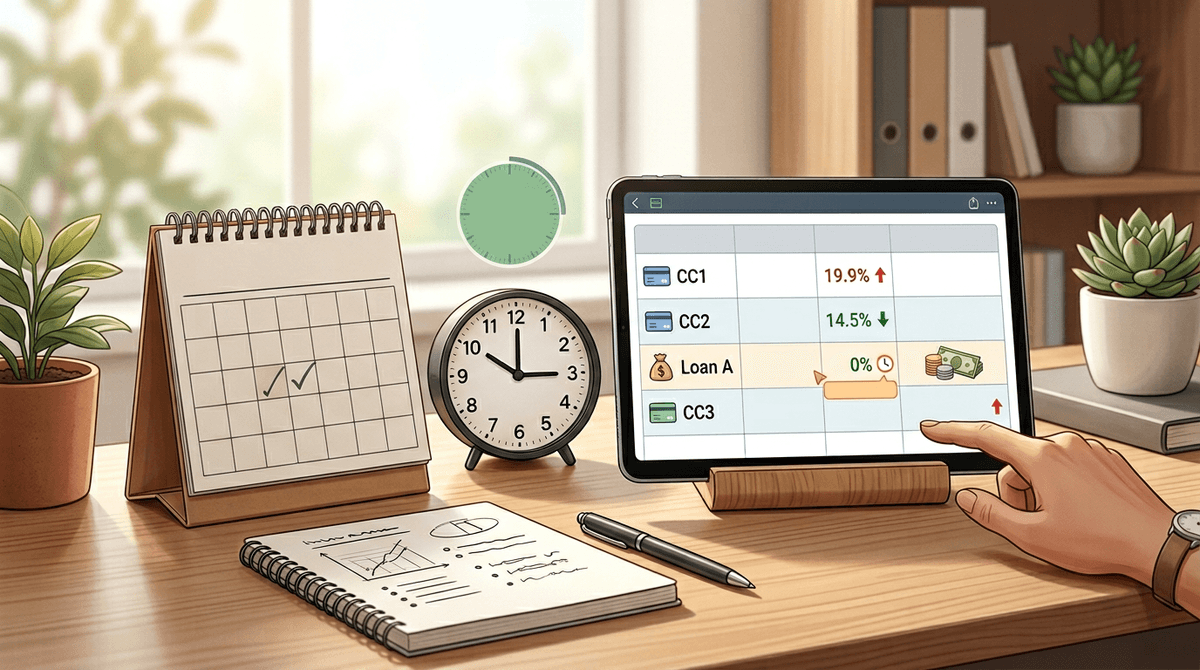
That payoff order is almost impossible to pick when the numbers live in five different apps. So start with a quick snapshot: each debt’s name, current balance, minimum payment, interest rate (APR), and due date. If you can add one more line, note whether it’s a credit card (spending can add back) or a fixed loan (it won’t).
Keep it fast. Use the most recent statement or the lender’s “current balance” screen, even if it’s mid-cycle. The goal isn’t perfect accounting—it’s being able to compare debts side by side without guessing.
One real-world snag: rates and minimums change. Promotional card APRs expire, and minimum payments often rise when balances rise. Set a 15-minute monthly check-in to refresh the sheet, then you can choose a payment amount you can actually repeat.
What can you pay on purpose (even in a slightly bad month)?
That “repeatable” part matters most when the month isn’t great—your car needs a tire, hours get cut, or groceries run higher than you planned. If your debt payment only works in a perfect month, you’ll keep rewriting the plan and end up sending random amounts.
Start by setting a floor payment you can make without drama: minimums on everything, plus one extra amount you can still cover after rent, utilities, food, and a small buffer for surprises. If your paycheck varies, use your lower-earning month as the baseline. Example: if you can reliably add $75 on top of minimums, lock that in. In better months, you can add more, but the floor stays the same.
The downside is emotional: a conservative number can feel slow. The payoff plan gets stronger anyway, because it survives real life.
Which one goes first when you’re torn between saving money and needing momentum?

Because the plan survives real life, you get to choose what keeps you sticking with it: saving the most money or feeling progress fast. Most months, you’ll send minimums to everything and aim your extra “floor” amount at one target debt.
If your main goal is to pay less interest, point the extra at the highest APR balance (often a credit card). This usually wins on dollars, but it can feel like nothing is happening if that balance is big. If you need momentum to stay consistent, point the extra at the smallest balance instead, so you can clear a bill sooner and roll that payment into the next debt. That can cost more in interest over time, especially if a high-rate card sits untouched for months.
A simple tie-breaker: if any debt is about to jump in rate (promo ending) or carries fees for carrying a balance, treat that like “highest APR” and hit it first. Once you pick, keep the target steady long enough to see a win—then set it up so you don’t have to re-decide every week.
A payment routine you don’t have to renegotiate every week
That “don’t re-decide” part usually breaks when payments depend on willpower. A bill comes due, you glance at the balances, and you start doing math in your head again. Instead, make the month run on rails: schedule minimum payments on every debt (autopay if possible), then schedule one separate “extra” payment to your chosen target debt on the same day you get paid.
Keep the rules simple. If you’re paid every two weeks, split your extra into two smaller payments so you’re not scrambling mid-month. If you use a credit card for groceries, pay that card weekly (even $25–$50) to stop new charges from undoing your progress.
The real-world drawback: autopay can trigger overdrafts if your account runs tight. Set reminders a few days before each pull, and keep a small cushion in checking so the routine stays boring. Then you can decide where the next “extra” goes when a debt disappears.
Progress without panic: where surprise expenses fit
That “boring” routine gets tested the first time something goes wrong mid-month: a dental copay, a parking ticket, a broken phone screen. If your only backup plan is “use the card,” you can end up paying interest on the emergency and watching your payoff target stall.
Build surprises into the plan on purpose. Keep a small “shock absorber” amount in checking or savings that you don’t use for regular bills—start with something like $300–$1,000 if you can. Then set a simple rule: if you use it, refill it before you increase extra debt payments again. That prevents one bad week from turning into three months of catch-up.
The hard part is patience. Money sitting there can feel wasted. It isn’t, because it keeps you from borrowing at credit-card rates when life does what it always does.
If income or bills shift, what do you change first?
That patience pays off when the plan gets hit again—this time by a smaller paycheck or a bill that jumps. Most people respond by skipping a payment at random. That’s how late fees and penalty rates sneak in.
Change things in this order. First, protect rent, utilities, groceries, and your “shock absorber,” because missing those creates bigger problems fast. Second, keep minimum payments on every debt to avoid fees and credit damage. Third, adjust only the extra payment: shrink it to a number you can repeat, or pause it for one month while you refill the buffer. If the squeeze lasts longer than a month, call lenders and ask about hardship plans before you fall behind.
The annoying reality is you may feel like you’re “going backward.” You’re not—you’re keeping the plan alive until your next stable month.
How you’ll know this plan works (and what to do next)
Keeping the plan alive is the win—now you need a way to see it’s working without staring at balances every day. Pick two check-ins: once a month, confirm every minimum cleared and your extra payment hit the target; once a quarter, note your total debt across all accounts. If that total trends down quarter over quarter (even slowly), the plan works. If it stays flat, you’re probably adding charges, missing the extra payment, or getting hit by fees.
When one debt is paid off, don’t “free up” that money for spending. Roll that entire old payment into the next target and update autopay the same week. The hassle: lenders can take days to process changes, so set calendar reminders until the first new cycle runs clean.