Why Morocco’s cities feel ancient and modern at once
At first, Morocco’s cities can make your itinerary feel badly designed. You might leave a glass-fronted café in Casablanca, pass a royal boulevard in Rabat, and then enter a medina where deliveries still move by handcart through lanes too narrow for cars. The contrast is not a neat “old versus new” split; both worlds operate side by side, sometimes on the same street.
That matters when choosing cities for only seven days. Casablanca and Rabat are useful for understanding contemporary Morocco, but they offer less concentrated medieval atmosphere than Fes. Marrakech delivers stronger visual impact and a livelier evening scene, although its busiest areas can feel highly managed for visitors. Fes is more demanding—confusing lanes, persistent touts, and fewer easy pauses—but rewards travelers who want daily life rather than a polished backdrop.
The practical answer is to treat each city as a different version of Morocco, not as interchangeable stops. Trains make the Atlantic corridor efficient; the longer jump to Marrakech needs more deliberate pacing. A focused route leaves room for street food and museums instead of turning every day into a luggage transfer.
Days 1–2: Casablanca → Rabat (modern capitals)
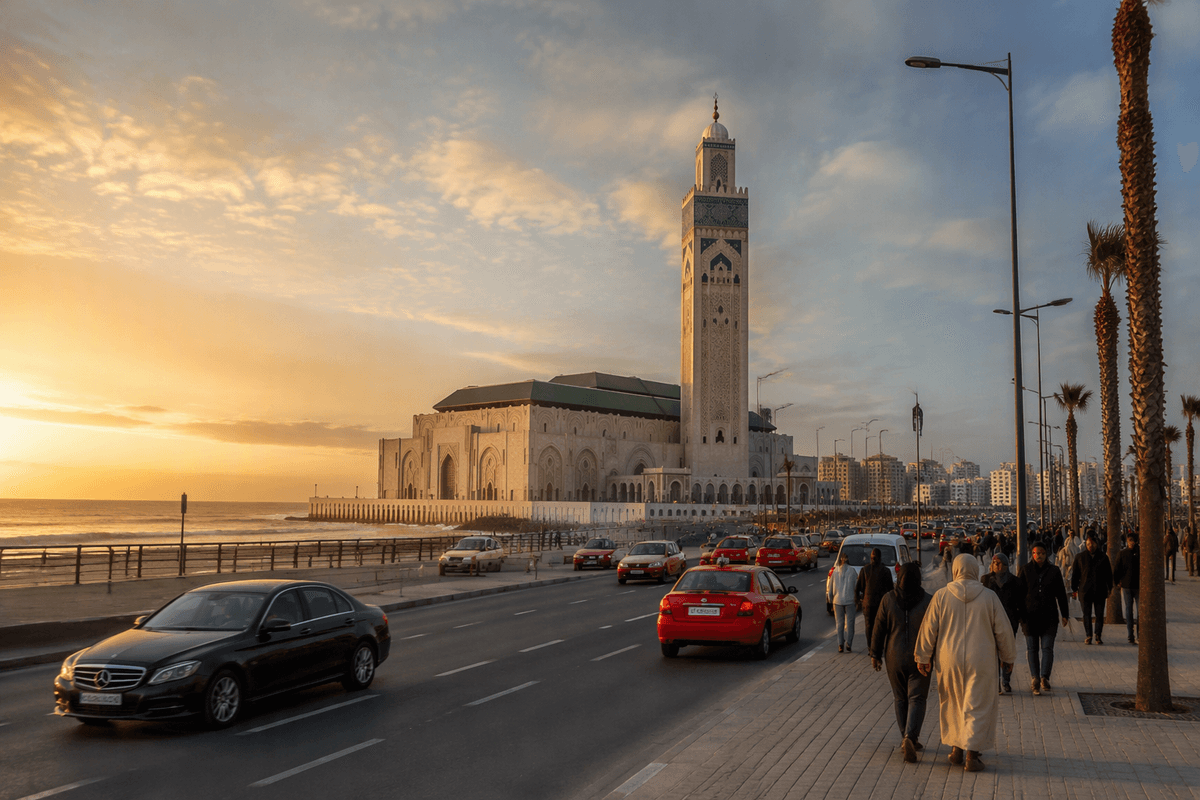
Land in Casablanca and resist the urge to treat it as a quick airport-to-medina stop. The city works best as a first afternoon and evening, when its scale, traffic, and contemporary energy help reset your expectations. Start around the Hassan II Mosque and the Corniche, then eat somewhere in the city rather than relying on the waterfront restaurants, which can be convenient but expensive for what they offer. Casablanca is less rewarding if you want an intact historic center, yet it gives you a clearer view of Morocco’s working, commercially minded present than Marrakech does.
Use the following morning for a compact urban circuit: the Art Deco buildings around Place Mohammed V, the old medina, and a café break before the train to Rabat. The journey is short enough that taking a grand taxi or hiring a car usually adds hassle rather than flexibility; rail is cheaper, predictable, and avoids Casablanca’s traffic. Leave after breakfast rather than trying to squeeze in a full museum visit, because delays, luggage storage, and finding the station can quietly consume the time you thought you had.
Rabat is calmer and easier to read, making it the better place to slow down. Walk the Kasbah of the Udayas, Chellah, and the modern administrative center, but allow space between them—Rabat’s broad avenues make distances look shorter than they are. Stay overnight if you value a less frantic first day; continuing immediately toward Tangier saves time but removes the contrast between Morocco’s commercial capital and its more composed political one.
Day 3: Tangier (gateway city contrasts)
Take the early train from Rabat to Tangier so the journey feels like a transition rather than a lost morning. The route is straightforward, and rail is still the sensible choice for a solo traveler on a mid-range budget; a private car offers door-to-door convenience but costs more and gives you little advantage once Tangier’s central streets become congested. After checking in, head toward the Grand Socco and the medina, where cafés, produce sellers, and tourist-facing shops overlap. Tangier is less architecturally concentrated than Fes, but that is part of its appeal: you see a port city shaped by trade, migration, and European influence rather than a single preserved historical mood.
Use the afternoon for the Kasbah Museum and a slow walk toward the old port, then choose one coastal viewpoint instead of trying to force in every famous overlook. Cap Spartel and the Caves of Hercules are worthwhile if you want open space and Atlantic scenery, but reaching them takes enough time that they work better with a taxi arranged for a return trip than as an improvised add-on. If the wind is strong or the light is poor, staying in town and spending longer around the Petit Socco will give you more cultural texture with less logistical effort.
Tangier is particularly good for an evening reset before Fes: dinner can be more relaxed, and the city’s nightlife feels less centered on one spectacle than Marrakech’s. Still, do not expect the medina to deliver Fes’s medieval intensity. Its strength is contrast—North African street life beside broad avenues, ferry traffic, galleries, and cafés—and that makes it a useful one-day stop, not necessarily the place to sacrifice a night elsewhere.
Days 4–5: Fes (deep medieval urban life)
Arrive in Fes with enough daylight to make the medina feel navigable rather than merely confusing. The train from Tangier is a long commitment, so an early departure matters; leaving later can turn check-in, a delayed meal, and the walk to your riad into the entire afternoon. Once settled, enter through Bab Bou Jeloud and follow the main lanes without trying to “complete” the medina. Fes rewards unplanned turns, but its narrow passages, uneven paving, and frequent delivery traffic make a rigid sightseeing circuit tiring quickly. A licensed local guide is worth considering for the first two hours if you want historical context and help with orientation, though you should agree on the scope and price beforehand.
Reserve the first full day for depth: the Bou Inania Madrasa, Nejjarine Museum, tanneries, and the quieter residential lanes beyond the busiest shopfronts. The tanneries are visually memorable but also one of the most managed tourist encounters, with unsolicited viewing platforms and sales pressure; treat them as a brief stop rather than the measure of Fes. Start early, when the light is softer and carts have not fully crowded the alleys, then take a long lunch or return to the riad during the hottest hours. Fes is less forgiving than Rabat if you over-plan, but two nights give you enough time to absorb its daily rhythm without turning every interaction into a transaction.
On the second evening, eat in the medina only if you still have the energy for its noise and navigation; otherwise, choose a restaurant in Ville Nouvelle for easier service and a useful change of pace. That contrast is why Fes earns two days: its medieval world is immersive, while the modern city provides relief rather than competing for attention.
Day 6: Marrakech (hyper-modern meets old walls)
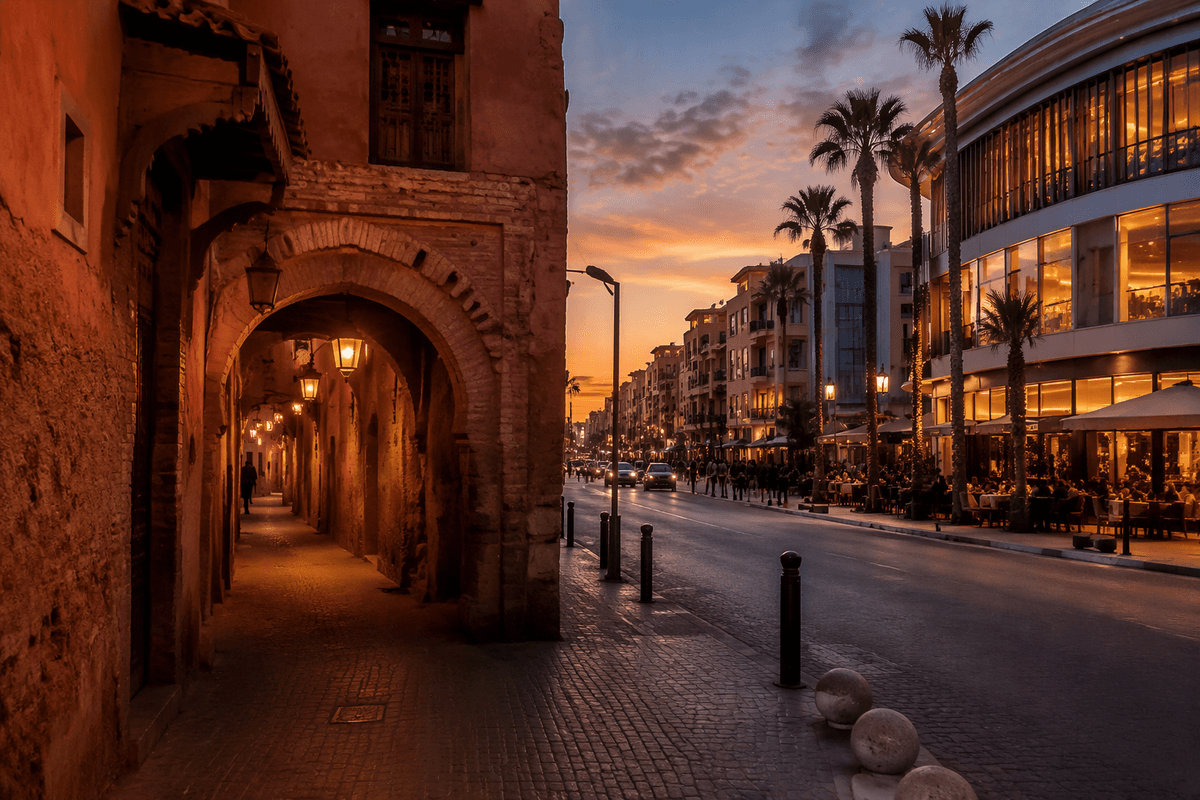
The journey from Fes to Marrakech is the day when this itinerary becomes least efficient, so take the earliest practical train and accept that much of the morning will disappear in transit. The ride is long but manageable, and rail remains preferable to arranging a private car unless you are splitting the cost with others; driving adds flexibility outside the cities but rarely saves time. After checking into a riad or hotel near the medina, avoid stacking major sights onto your arrival afternoon. A short walk through the souks, followed by the Koutoubia Mosque and a pause in the surrounding gardens, gives you orientation without turning fatigue into a poor first impression.
Marrakech is visually louder and more visitor-focused than Fes. The medina’s craft shops, rooftop restaurants, and Jemaa el-Fnaa create an immediate sense of energy, but that concentration also brings persistent sales approaches, inflated prices, and crowds that make a supposedly short walk take twice as long. Visit the square near sunset for its changing atmosphere, then move away before dinner if the performance feels too staged or overwhelming. The Majorelle Garden and nearby museums are worthwhile for travelers interested in modern design and Morocco’s international image, although they require a timed visit and can feel detached from everyday city life.
Use the evening to compare the two sides of Marrakech rather than chase every landmark: have one meal in the medina, then walk through Gueliz for polished cafés, galleries, and wider streets. Gueliz is less atmospheric but easier after a long travel day, especially in hot weather. Marrakech works as the itinerary’s final major contrast—more theatrical than Fes, more commercially polished than Tangier—provided you treat its energy as an experience to assess, not something you must constantly consume.
Day 7: Reset, shop smart, and depart smoothly
Keep the final morning deliberately light. If your flight leaves Marrakech late, return to the souks for one focused shopping pass rather than reopening the entire maze: compare prices at two or three stalls, inspect leather and textiles in daylight, and leave enough time to reach your accommodation for luggage. Bargaining works best when you are genuinely willing to walk away; rushed airport shopping usually produces higher prices and items you have not had time to assess. For a morning departure, skip ambitious sightseeing and stay near the hotel, since traffic around the airport can make a short distance unpredictable.
Use the reset to handle practical details that are easy to postpone—confirm transport, withdraw or exchange the cash you still need, and repack purchases before checkout. A pre-arranged airport transfer is often worth the extra cost if you have an early flight or heavy luggage; taxis can be cheaper, but negotiating at the last minute adds stress and rarely improves the morning. If you are departing from Casablanca instead, allow a generous rail buffer rather than treating the connection as automatic.
The route works because each city contributes something distinct, not because every hour is optimized. Expect heat, fatigue, and a few commercial encounters, then leave room for the moments that made the detours worthwhile.