Why grease fires behave differently than other flames
You notice it before you fully name it: the oil looks thinner, almost glassy, and the little ripples don’t settle the way they did a minute ago. Then the popping gets sharper, the smoke turns from “cooking smell” to a throat-prickling haze, and the pan suddenly feels like it has its own weather. This is the uncomfortable part—because it may not look dramatic yet, and it’s easy to assume you still have time to finish the sear.
Grease fires don’t behave like a paper towel catching at the edge. The fuel isn’t a solid object that burns down; it’s a pool of hot liquid and, more importantly, a cloud of oil vapor rising off the surface. Once that vapor ignites, the heat of the flame keeps the oil hot enough to keep making more vapor, so it can feel like the fire “feeds itself.” Small movements—nudging the pan, tilting it to peek, shifting it to another burner—can send a thin wave of burning oil outward, spreading the problem instead of shrinking it.
The water reflex and the sudden fireball effect
Your hand often goes for the faucet before your brain catches up. It’s the same reflex you’d use on a cutting board flare-up or a paper towel that lit at the corner—add water, cool it down, move on. But with a pan of oil, that “quick fix” can turn the whole kitchen brighter in a half second.
Water is heavier than oil, so it drops through the hot grease instead of sitting on top. In that instant, it flashes toward steam and expands violently, pushing oil up and out in fine droplets. Those droplets have a huge surface area, so they heat and ignite fast—what looked like one contained flame becomes a rolling fireball above the pan. Even a small splash can do it, and it’s why carrying the pan to the sink is so risky: sloshing turns a pool fire into a spray problem. Cutting the burner can help, but the real shift is realizing the flame is riding on vapor and oxygen, not “needing” more liquid.
Smothering works because oxygen is the real lever
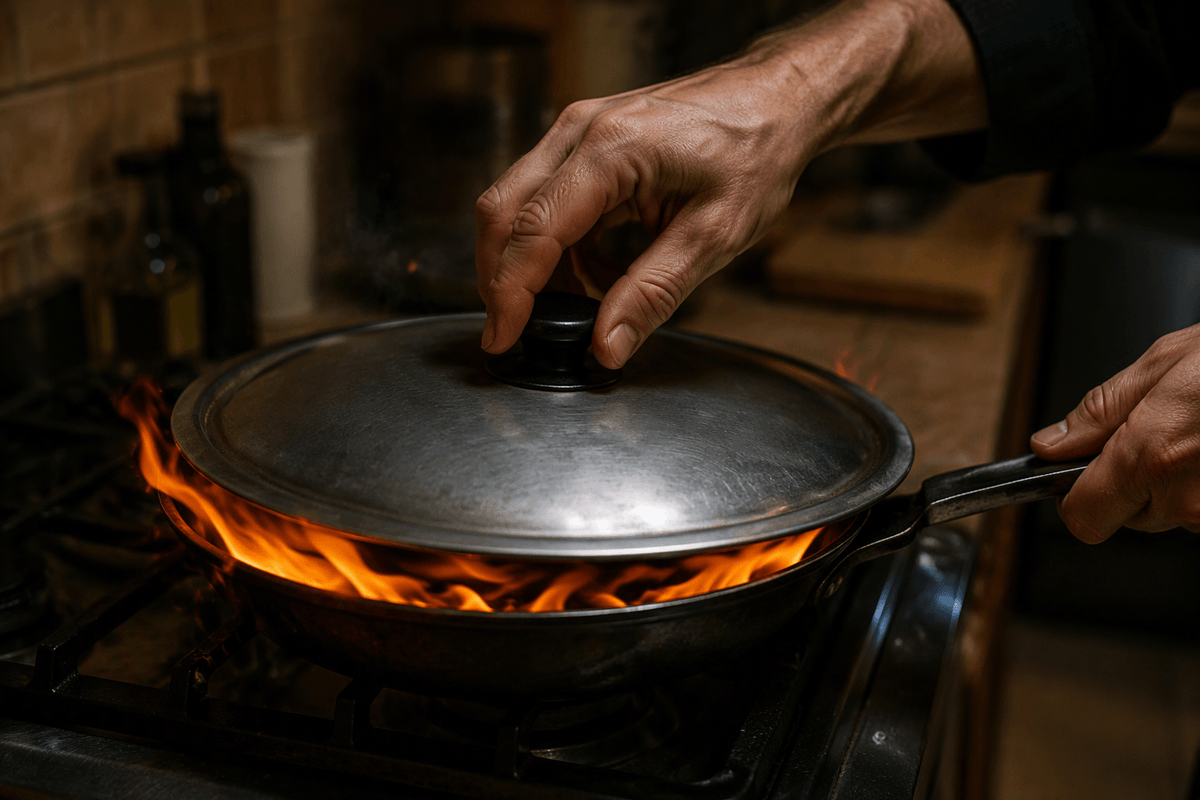
The moment you stop chasing the flame, you can feel the situation change. The pan is still radiating heat, but the fire itself is surprisingly needy—if it can’t pull in fresh air, it starts to look smaller, lazier, less eager. That’s the part many people miss: the oil is hot, but the flame is living in the thin space above it where vapor meets oxygen.
Smothering works because it interrupts that meeting. Sliding a metal lid or a sheet pan over the top doesn’t “put out” the oil so much as it starves the fire of air, and the flame often collapses in a second or two. It can feel uncertain the first time because you’re still hearing sizzling underneath, and you may expect a dramatic finish. But leaving the cover in place matters—lifting it too soon can let oxygen rush back in while the vapor is still being made, and the flare can restart as if nothing was learned.
Baking soda, salt, and why results feel inconsistent
It’s tempting to reach for the nearest shaker, and sometimes it even looks like it works—until it doesn’t. You toss a pinch, the flame stutters, and for a second you think you’ve “handled it.” But the next shake can bounce off the heat and do almost nothing, or it can scatter and make you hesitate while the fire keeps pulling air from around the pan.
Baking soda can help in some situations because it doesn’t just cover the surface; when it gets hot enough, it can release carbon dioxide, which slightly dilutes the oxygen right where the flame lives. It takes enough heat and enough powder landing in the right place, and small kitchen amounts don’t always build a consistent blanket. Salt is different: it can smother by physically covering the burning area, but it also tends to roll and slide in hot oil, especially if the pan is tilted even a little. That’s why these fixes can feel random—your outcome depends on how much you have, how steady the pan is, and whether the flame is really being deprived of air.
Fire extinguishers: what “Class K” actually changes
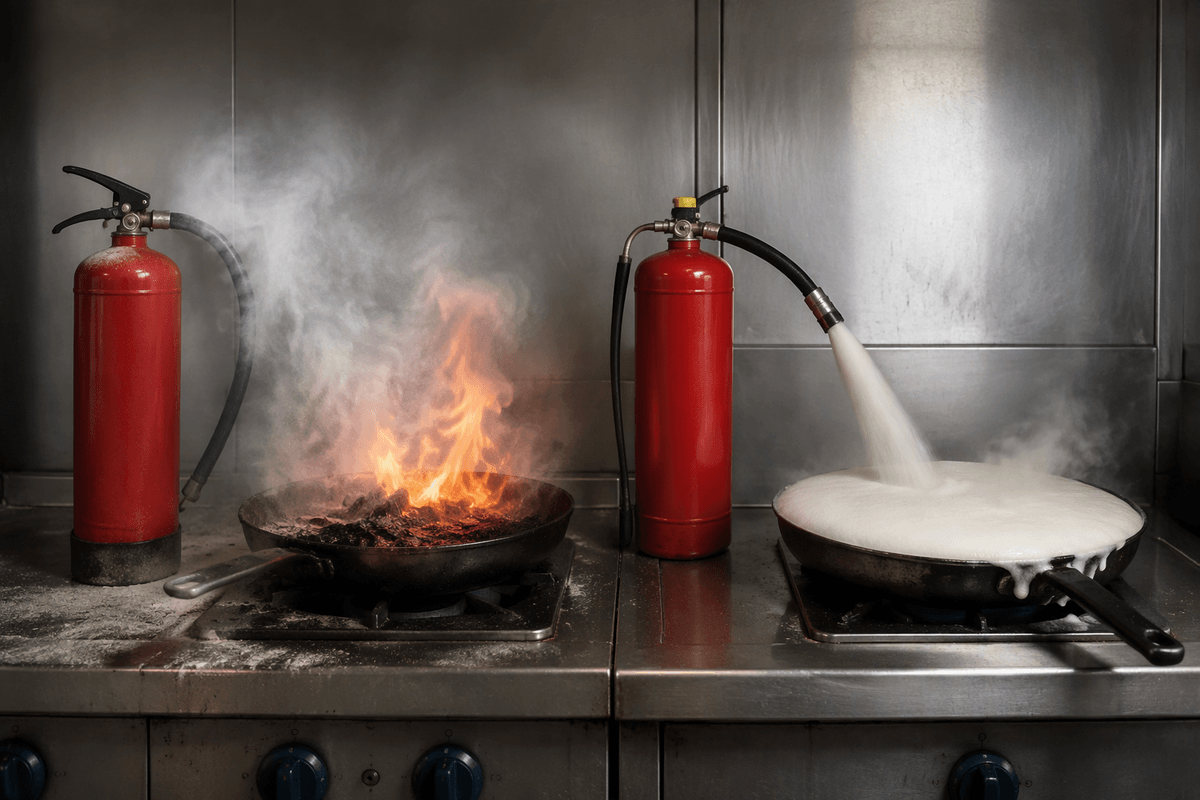
The first time someone grabs an extinguisher in a kitchen, it often feels like the “serious” move—until you notice the label and realize not all extinguishers behave the same way on hot oil. A standard household ABC unit can knock flames down, but it’s doing it with powder meant for mixed fires, and the pan may still be hot enough to keep making vapor. That’s where the uneasy part lives: the fire looks gone, yet the conditions that created it can still be sitting there, quietly.
A Class K extinguisher is built around that exact problem. Instead of only smothering the flame, the wet chemical is designed to react with hot cooking oils and form a soapy-looking layer that helps seal the surface and cool it at the same time. In practice, it tends to reduce the “pop back” feeling you get when oxygen finds hot vapor again. It still isn’t magic—aiming, distance, and the mess afterward matter—but it changes the odds by treating the grease itself, not just the fire above it.
When the safest decision is to stop fighting it
Sometimes the moment that decides everything is when the flames aren’t huge yet—but your hands start doing too much at once. You’re holding a lid in one hand, reaching for a towel with the other, and your eyes keep flicking to the cabinets and the hood fan like you can “manage” the space around the fire. That’s when people try to carry the pan, or lean in close, or make one more quick move that would be fine with any other kitchen mess. With hot oil, those extra steps are where burning droplets and surprise flare-ups come from.
There’s a point where the safest call is simply getting distance and letting the setup do less harm: heat off, cover on if it’s already within easy reach, and then stop hovering. If the flame is climbing past the pan, licking at the hood, or you’re not confident you can smother it cleanly without jostling the oil, “fighting it” can turn into feeding it. The goal shifts from winning fast to not making it bigger.
After it’s out: re-ignition, burns, and cleanup risks
A minute after the flames disappear, the pan can look almost normal again—just a dark surface with a wavering shimmer. The oil may still be hot enough to keep making vapor, so the “out” feeling can be temporary if air gets back in too soon. Lifting the lid for a quick check, bumping the pan to the side, or turning a fan on high can change the airflow right where the vapor collects, and a small flare can reappear like it never left.
The other surprise is how injuries and mess happen after the drama. Steam and hot metal can burn just as fast as flame, and oil that splattered onto the stove, counter edge, or floor can stay hot longer than you expect. Cleanup also tends to tempt people into paper towels and water right away—exactly when leftover heat can make things smoke again, or when a wet rag can slide into a warm pan and hiss violently. Waiting for everything to truly cool is often the quiet safety step people skip.